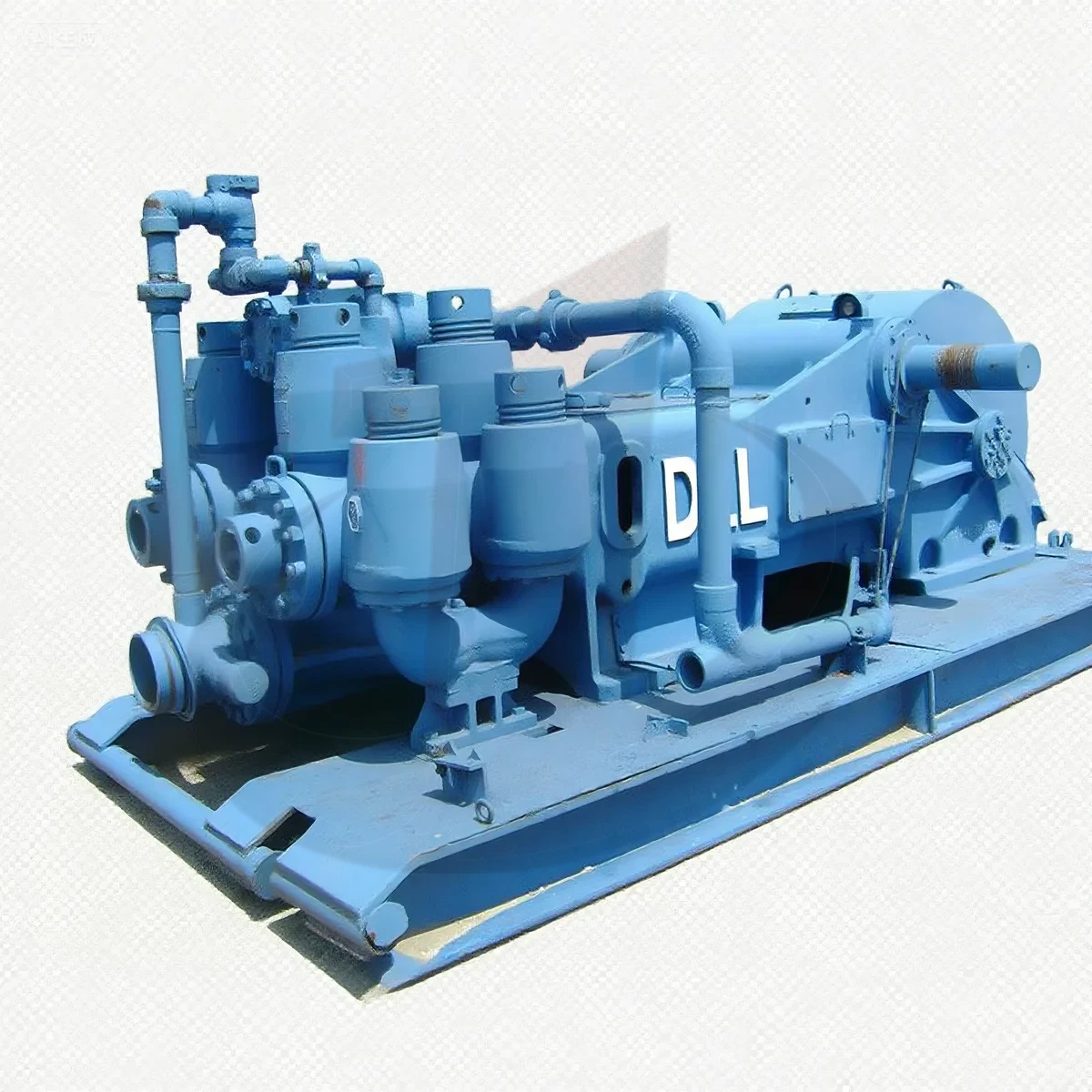
The Gardner Denver KG-KXG is a triplex mud pump whose power end is built on a single precision-cast frame in high-strength alloy or ductile iron. Its transmission uses a continuous herringbone gear: the symmetrical V-shaped tooth form cancels the axial thrust generated during meshing, a signature of the Gardner Denver power train. The reciprocating assembly is engineered for continuous heavy impact and tensile loads — the connecting rod is cast in one piece from high-strength ductile iron, and a forged connecting rod in 35CrMo alloy steel is also offered for added strength and toughness. Factory data rates the KG-KXG at 3113 PSI max working pressure and 60 SPM rated speed, with pressure capability by liner size: 1772 PSI at 8 in, rising through 7.75, 7.5, 7.25, 7, 6.75 and 6.5 in to 3113 PSI at 6.25 in. We supply replacement fluid-end parts for this model to drilling contractors and service companies across Canada, the United States and international oil and gas markets.
FAQ
What is the maximum working pressure of the Gardner Denver KG-KXG?
Factory data rates the KG-KXG at 3113 PSI max working pressure with the 6.25 in liner at 60 SPM rated speed. With the 8 in liner the rating is 1772 PSI.
Which liner sizes are listed for the KG-KXG?
The factory chart covers 8 in, 7.75 in, 7.5 in, 7.25 in, 7 in, 6.75 in, 6.5 in and 6.25 in bores, with maximum pressures from 1772 PSI up to 3113 PSI. Pick the bore that fits your pressure and flow targets.
Do you stock fluid-end parts for the KG-KXG?
Inventory for this model changes with demand, so please contact us for current availability on liners, pistons, valves, valve seats, inserts and packing for the KG-KXG.
Can you ship KG-KXG parts to Canada, the US or international sites?
Yes. We export mud pump fluid-end parts under HS code 84139100 to Canada, the United States and international oil and gas destinations, with export documentation included.
Why does the KG-KXG use a herringbone gear instead of a helical gear?
The herringbone gear has a symmetrical V-shaped tooth structure, so the axial thrust produced on each helix during meshing cancels out. This keeps the transmission smooth and reduces bearing and gear wear in continuous heavy service.